Background

Showing posts with label buy. Show all posts

Saturday, March 3, 2012

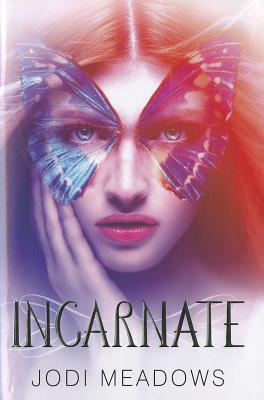
Incarnate by Jodi Meadows, A She Said/She Said Review

Hi, Amethyst here. I'm taking lead for this round of She Said/She Said. Why? 'Cause I finished the book first, s'why. In fact, I finished Jodi Meadows's debut novel Incarnate about forty-five minutes ago. I purchased it yesterday, and to be fair, I did have a 70-page head start before I began reading last evening.

I'd say it's a fifty-fifty split as to how I'm finished with Incarnate; fifty per cent, I'm kind of a sprinter when I read, so if I like a book, I tend to like it in fast forward, and secondly, Jodi's novel accomplishes earning both the descriptions "light" and "full. On the one hand, Jodi has an almost unconscious stream-of-conscious (say that five times fast) charm. Knowing her outside of the author/reviewer format, I can tell you, Jodi's bouncy enthusiasm and kitten-like perplexity shine right through, even in main character Ana's most wrought moments. On the other hand, I never got the feeling Jodi didn't respect the gravity of the sometimes monstrous events taking place in Ana's life, and her world. Even with the subtle touch uncertanties were uncertain, fears were fearful, and warm fuzzies were dandelions poofs at the height of summer.

What did I like best? The Almosts. The almost kisses. The almost weepings. The questions almost answered. I love the way Jodi managed to make me (metaphorically) lean forward so far out of my seat I ALMOST fell out of it, and yet, never once did I actually face plant into the carpet. There was that subtle grace again, the grace of almost.

What didn't I like? Yes, as much as I enjoyed Incarnate, I do have one or two gripes. First of all, the math of things was confusing. I'm no stranger to math confusing me, but even I generally get the gist within real applications such as generations and ages. Even for a necessarily convoluted (and very cool) concept, the numbers seemed to contradict each other more than they lined up. Maybe because I was reading too fast? I wanted a clearer explanation of the term "quindec" than what I gleaned from context clues. Also, early on in the book I was under the impression people had only been around for about a thousand years, but later it's stated they'd been living and turning through the revolving door of reincarnation for at least five millenia, not one. Trying to get the two things to agree in my head was a bit of a draw out.

My other gripe is a lack of Author Photo. Jodi's really cute. The world deserves to get to Awwww over the cute that is Jodi Meadows.

Last but not least, it should be mentioned, I read a copy of Incarnate I purchased, so it was as polished as need be. Michelle, lucky early bird, was blessed to have been granted an e-ARC, compliments of NetGalley. This means her copy may have been slightly different than mine, and therefor might (or might not!) reflect in her review (which I have not yet seen).

I bought the book, so I think that's a pretty clear Buy, right?
Thursday, January 12, 2012

Clockwork Prince


Somewhere in my brain, I'd already reviewed Clockwork Prince, the second book in Cassandra Clare's THE INFERNAL DEVICES (prequel series to Clare's hugely popular THE IMMORTAL INSTRUMENTS series), but maybe I just dreamed that, or maybe my brain referred to me mentioning the absolute hot-boyness of cover character James "Jem" Carstairs . . . because I would definitely have mentioned it, trust me.

But I guess, I didn't, and far be if from me to argue with the Libri Ago archives.  So! On with the review!

Needless to say, I bought the book. I'd have bought the book if I hated it, just for that cover, and buying it story-unread is next to the same thing, there's proof.

However, I did enjoy the story, though as is often the case, it took me a little while to get over my personal distaste regarding Clare's style of narrative. I generally love her dialogue, but many a narrative sentence is mentally tightened, de-passive-voiced, or unrepetitivized (yes, I'm making up words; I'm allowed) whilst I read. Also, as seems par for the course with a Clare book, the things I loved, I loved, but the things I disliked, I really disliked, so for the sake of keeping things straight, I'll divide the two.

Loved:

*Will's vulnerability and subsequent hope. In the beginning, we only know Will's main goal in life seems to make himself appear utterly unlikable, forget lovable. We find out why, and we also find out that even though Will is forced to play the game with certain parameters, he's by no means given up changing things.

*Jem's fragility, backed by optimism. The boy is dying, and yet, he keeps himself open to the happiness to be had in his short life. Of course, the fact that Jem is so very good makes me suspect him of every foul betrayal in the world, but we'll see. Maybe Clare will cut us a break.

*The revelation that husband and wife actually love one another very much, and have been victims of miscomunications.

*A certain warlock. 'Nuff said.

Disliked:

*Tessa's fickleness. I don't care if she's the heroine. I don't care of she's not entirely human, or if she's under a lot of pressure, or if yes, her choices of love interest are particularly amazing, I cannot buy her having the same intensity of feelings--especially physical--for both Will and Jem. Sometimes I felt as if I should see her being more drawn to Will, but it was a weakly written bit. I make no secret of it. I don't like Tessa, and I don't think she's a very well-developed character.

* Jessamine, but that's a no-brainer. How any girl could be that naive voluntarily . . . sheesh.

*Like I said, the narrative, which is sometimes wont to wander over hill and dale.

In general, the book definitely hit-it-off better with me than the first TID novel, and has accomplished garnering my interest in the conclusion, Clockwork Princess. I said of Angel, if you bought the other Clare books, buy this one out to complete your set. if you didn't, make use of you library card, and enjoy!

Monday, January 9, 2012

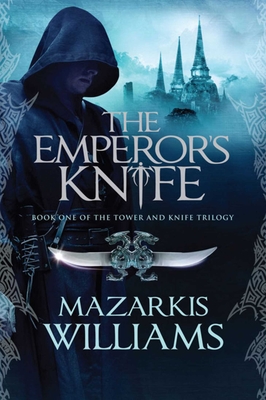
The Emperor's Knife


There's a crazy, swervy border between subtle and vague writing, and it takes quite a bit of education and error before one lands on the desired side of it. In my opinion, Mazarkis Williams has pulled it off with the novel, The Emperor's Knife. 


While I don't mean to imply Williams plays it safe throughout the book--many bold moves and slightly-uncomfortable moments are to be had--the story plays out as a clear starter installment without falling prey to thinness or complete translucence. Or in less fancy terms, even though you go in knowing this book is the beginning in a series, and everything has that clear "set up for what's next" feel, it's still incredibly satisfying. Like a really good appetizer, or a small cup of loaded potato soup, the world-building comes across rich, intriguing, and what losses are to be had strike at the heart, despite so little (comparatively) time to become connected to all the characters individually.

I hesitate to summarize the book as being a sort of The Girl of Fire and Thorns for boys, because A). GFT appeals to boys too, and is not girl-liked-exclusive, and I think the exact reverse of Knife: it might *trend* more toward a male reader, but it will still have great appeal for female readers.

All that being said, here's the skinny: Take a well-done bit of Prince of Persia (yes, the video game, and no, I don't mean the movie, which was pretty, but not much else), some of  Tamora Pierce's awesome everything-development, wrap it in a nice, warm, Piers Anthony Adept Series, and add a Juliet Marillier pillow, and you're rocking out a pretty crafty "prophesied overthrowing of a corrupt monarchy" story, set in desert-ish lands, with sentient glyphs, evil spirits, and a sheltered kid brother heir.

I was lucky enough to get my eyeballs on an eARC through Netgalley, but I'd--*thinks*--yeah, I'd endorse a Buy on this one.

Wednesday, December 21, 2011

Every Other Day


★★★★½*

Every Other Day by Jennifer Lynn Barnes

Chalk another one up on the list of Books that Hooked Me by the First Page. Actually, this one hooked me by the first line. Let me show you why: 


"The decision to make hellhounds an endangered species was beyond asinine . . . " 

I'll stop there for a moment. (Don't worry, you'll get more in a minute.) In those few words, I knew this book was going to be awesome. A world just like ours, but where all of the creatures from your nightmares are real. Then humans, being the odd creatures we are, decided that every species should be preserved—including those that will rip you to shreds and munch on your spleen while you try to "protect" it. Case in point: 


(still within the first paragraph) "[These were the same people] that thought you could train a horde of zombies just as easily as Pavlov's dogs. 
"'When I ring the bell, you will cease tearing the flesh from my bones.' 
"Yeah, right." 

So whose fault is it that humankind are the supposed protectors but really just prey to the paranormal world? Darwin. Yup, that Darwin. Charles and his Beagle stumbled upon not only evolution, but paranormal life as well. The implications of a world like this, where a single moment altered history to the point where the modern era is almost the same, yet completely different, is fascinating. Even more so when the author does a good job of fleshing out the world and the compounding impacts such a change would have upon it, which Barnes does fairly well. 


I won't tell you about the plot (which you can find by reading the flap copy) or the creatures (which would get a bit spoilery) that, by itself, isn't what drew me in. Really, it was the way in which Barnes takes traditional notions of werewolves and zombies and vampires (yes, even sparklepires), et al., and twists them in such a way that their paranormal existence kinda makes sense, especially within the variables of this alternate world. Maybe that's why I enjoyed Every Other Day so much: the mythos is almost logical, which is rare for paranormal stories. 

Even more important, she takes that one tiny little moment in history and explores the resonance over time and how people and governments change and cope with this new world. 


This probably seems like a rather odd review to not even mention the plot or characters, but honestly, you'll find that in just about every other review. Instead, I've discussed the parts of this book that made me read it so quickly, and also want to dive immediately into the next book. 


*A note on the rating: While I loved the world-building, some parts of the story fell a little flat for me. So though I really enjoyed the book overall, it didn't quite feel like a 5-star. Here's to hoping that improves in the next book of the series. 

**Also, a note on the cover: Gorgeous doesn't do it justice. While the main image might not give a clue as to what the story's about, who cares? It's pretty to stare at.

If you like that cover, take a peek at The Butterfly Clues by Kate Ellison, another title from the same publisher (Egmont). Wouldn't they look so pretty sitting together on a shelf? Sadly, you'll have to wait for Valentine's Day before you can reunite the pair as The Butterfly Clues releases that day.


Thanks to the publisher and NetGalley for an advance copy of the book.

Tuesday, November 29, 2011

The Composer Is Dead


★★★★★★★*

The Composer Is Dead by Lemony Snicket

The moment I saw Lemony Snicket's name on the cover of The Composer Is Dead at the library the other day, I knew I had to read it. I knew it would be funny; what I wasn't expecting was this musical masterpiece.

The story is somewhat basic: a composer has been murdered, and the detective must sound out the man, er, instrument who committed the crime. The text, however, isn't what makes this book so amazing.

This isn't just a picture book, nor is it just an audio book or just a soundtrack; it is an experience. The book is funny enough on its own, but play the accompanying cd with soundtrack, and it's even greater. The experience, however, doesn't reach fever pitch until you add in Snicket's exceptional narration (also included on the cd).

Daniel Handler, the man behind the Snicket, must have played in an orchestra at some point in his life. It's the only way to explain how all of the humor in The Composer Is Dead is spot on.

While marketed as a children's picture book, young children won't get most of the jokes. Instead, the musically inclined adult reading (or listening) to the book will be laughing to the point of hyperventilating. 

Don't believe me? See the book trailer, below, which demonstrates a bit of what I'm talking about.


I played this book for my stepmom, a concert cellist cum cello instructor. She laughed and nodded at all the jokes and one-liners, and then immediately went out to purchase a copy to share with her students.

I highly recommend this book as a gift for the music major/orchestra teacher/flautist in your life. If they've played in an orchestra, even just in high school, they will be rolling by the time the experience ends. Then buy a copy for yourself.

*Because this book deserves much more than 5 stars.

Monday, November 14, 2011

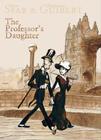
The Professor's Daughter


★★★★★

The Professor's Daughter by Joann Sfar & Emmanuel Guibert

Before the paranormal romance craze, the concept of this book would have seemed utterly bizarre: in Victorian England, the daughter of an Egyptologist and one of the mummies he brought back from Egypt fall in love. (Plus accidental murder, kidnappings, and Queen Victoria being tossed in the Thames River.)

Now, there are other zombie love stories floating around, but when The Professor's Daughter was originally published in France in 1997, it was a completely novel idea. The reason it works? The simply gorgeous illustrations by Guibert convey so much emotion, especially the beginning, when the pages were illustrated in Sepia tones.

The colors actually shift as the book progresses. The changes have meaning within the story, so I won't describe it here, but Elizabeth Bird shared an excellent review (much better than mine, actually) that explains why.

My favorite of the illustrations is on page 11. For some reason, the composition and colors strike me as being near perfect, even if there is a mummy wearing a suit in it. I would honestly hang a print of it on my wall, I find it so fascinating. It might require some explanation for visitors, though.

The storyline itself is rather bizarre, but combined with the illustrations—and a good dose of suspended disbelief—it transcends the stereotypical comic or graphic novel to become a piece of literature. I heartily recommend buying The Professor's Daughter, even if only to gaze at the lovely images.

Wednesday, November 9, 2011

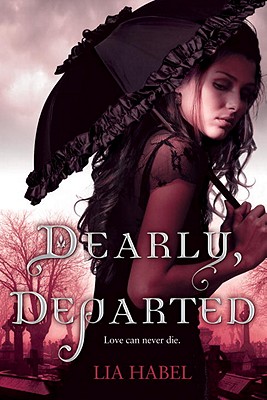
Dearly, Departed


NetGalley has the author of Dearly, Departed as LISA Habel, but I'll go out on a limb and bet the novel's lovely and dark cover has the right of it with LIA. You with me?

Mulitple author identities aside, I greatly enjoyed my first encounter with a Habel work. Released just this month, Dearly, Departed (yes, comma intentional)  encompasses the stories of a group of people, chaptered through their individual viewpoints, which range from disenfranchised post-apocalyptic "New Victorian" misses who miss natural propriety by a wide margin, all the way to military-approved and maintained undead with more heart (even if its entirely static) than the average high-class NV resident, with several types of character between.

So what happens if the world goes to hell in a natural-disaster-fiber-woven basket? It seems people regroup in more southerly climes, and a couple centuries later nothing really changes . . . well, except for The Lazarus  (or Laz) virus. The world still experiences class disparity, disagreements in political strategy,  and disputes regarding the place of technology. The world is the world.

At least, until Miss Nora Dearly--daughter of famed medical scientist Victor Dearly, deceased for the past year--becomes the Winner's prize between two contestants: First, the folks who know about the Lazarus virus, which reanimates a dead body to varying degrees of sanity and retained humanity, and want the government and someday the world to differentiate between the slobbering masses of undead only concerned seeing to their cannibalistic drives and the undead perfectly capable of controlling themselves, possessed of their "living days" personalities and restraints.

Secondly, the folks who know of the Laz, and want every single body infected with it torched in the nearest available fashion, regardless of mental or moral state.

Nora is important to both factions. Nora is a key piece of flesh in the fight.

In a time when the Laz rages from person to person via bodily fluids, threatening all humanity, Nora Dearly, brave, feisty, hot-tempered, and open-minded, and much-loved--eventually by the dead and alive alike . . . 

Nora Dearly is immune.

I had some minor gripes with this YA novel (somewhat slow, clunky beginning; somewhat rushed, abrupt end--though being the first of a trilogy, that must be given some leeway; and a couple too-close-to-the-line Twilight-esque moments), but all-in-all the book engaged me enough, I didn't mind. I truly enjoyed reading the book. I connected with the characters, which I feel were well-developed and 3D, including the secondary characters. The bonds between the love interests rang true, as did the familial bonds, and the bonds between close friends. I totally bonded with their bonds, and that's reason for high praise from me.

Was Dearly, Departed perfect? No. Was it worth buying (even though I was lucky enough to have access to free copy)? Yes. If you don't have the cash right now, get it from your library. It's a nice escape, without being too fluffy. Not a beach read, take it with white chocolate cocoa and your Snuggie.

Friday, October 28, 2011

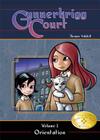
Gunnerkrigg Court: Orientation


★★★★★

Gunnerkrigg Court: Orientation by Tom Siddell

I've been fascinated for a while now with the fusion of text and graphics that comprise graphic novels. The problem I find is that most comics and graphic novels are geared toward a male audience. While it's great that there are books for the numerous guys who are reluctant readers, I wish there were more graphic novels that appealed to women—especially women who are strong, smart, and dress in actual clothes. So I was ecstatic when I found Gunnerkrigg Court, a captivating series of graphic novels for teen girls.

In the first volume, Orientation, Antimony Carver arrives at the gloomy Gunnerkrigg Court, a British boarding school that looks more like a factory than a school. Sounds normal enough, but that illusion fades within the first few pages as strange things start to happen.

Soon enough Antimony discovers that her parents—her mother recently deceased and her father missing—are intricately tied to this school and the mysteries that surround it. Events at Gunnerkrigg may even hold the key to understanding what happened to her parents.

Antimony's world is a dark one populated with robots, demons, and forest gods, but it also one in which she and her pre-teen classmates can still have fun. This isn't a humorous book by any means, but there is a quirkiness to the situations and scenes that give it a certain kind of depth I've only found in graphic novels. The best comparison I can make is to Emily the Strange, another graphic novel series* I absolutely adore. As with Emily the Strange, there's something youthful but dark about the illustrations that I find fascinating.

While some of the chapters in this volume feel a bit episodic—which makes sense considering the series started out as a web comic—enough of the the overarching plot threads are woven throughout that it all fits together well.

This volume ends much like the Harry Potter books: at the end of the school year but with enough mystery to propel readers immediately into the next book.

Now all I have to do is track down the rest of the series since my library only carries the first. (Why do they do that‽) This is definitely a series I'd recommend, though it might be a bit tougher to find a copy.** 

* There is a series of books for teens featuring Emily the Strange that are mainly text-based but with graphic elements. The original graphic novels are much darker, though just as compelling, and fit more into the traditional comic style. 

** Hint: All of the books in this series is available online through Indiebound, even if your local indie doesn't carry them.

Saturday, October 1, 2011

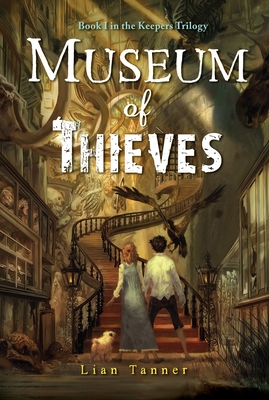
Museum of Thieves


Lian Tanner's Museum of Thieves presents as a very good starter book for readers who have a new-found interestin  alternate universe sorts of books, and falls in with some very good company, such as Brandon Mull's new Beyonders series, and Du Prau's City of Ember (which, as is often the case, is better than the film based upong it, despite Soairse Ronan's great performance), and even to a lighter degree, Nix's Keys to the Kingdom series.

Living in a world where anything even remotely risky (dog germs, anyone?) is disallowed and removed, and children are--literally--chained to adults at all time to prevent accidents, Goldie ends up unfettered and recruited to become the fifth keeper at The Museum of Dunt. Only the phrase 'the museum' turns out to be interchangeable with 'building in which several actual realities exist, all of which are prone to shifting about and bulging at the seams when they get themselves in a snit".

A snit is exactly what the museum gets into when the ambitious Fugleman plots to  overthrow his sister, The Protectorate, for rule over the city of Jewel, and sends in his lackeys, The Blessed Guardians (who, incidently, are the tyrannical imperialists over all the chained children during regular business hours) to nail down all the rooms in the museum.

It's up to Goldie and the other Keepers (tall, smooth Sinew; grandmotherly gypsy-like Olga Cyavolga; hulking Herro Dan; and shape-shifting brizzlehound, Broo) to thwart the Fugleman and calm down the musuem enough that all of life's atrocities don't come spilling through the walls into Jewel, threatening life and limb of every being therein.  But can they do it without unleashing something just as bad, or worse?

I did happen to BUY this one, and at nine bucks for the paperback copy, I'm perfect content with that choice. I'll read the follow-up books, no doubt.

Monday, September 26, 2011

Across the Universe


I have heard a lot of gushing over quite a swath of time about Beth Revis's novel, Across the Universe. I mean, a lot.

I heard it's a gorgeous blend of mystery and science fiction. I heard it's heart-rending. I heard the potential love story hits hard. I heard the world-building came through both lush and realistic (for a futuristic spaceship).

I don't think it was good for me, hearing all that ahead of reading the book for myself. I found the mystery mediocre, and disappointingly easy to figure out far ahead of the characters. Maybe I was meant to, I don't know. The descriptions of the ship were good, and somewhat disgusting, in a way I appreciated (though if I'd read the word "relish" in any of its forms again, I could have growled). The love story appealed to me more from Elder's viewpoint than Amy's, but I suppose that also makes more sense, as Elder was far more into it, not being in the midst of a familial crises the same sort as Amy's.

All-in-all, I think I'd just expected too much from the book and when I concluded it was only "pretty decent", I felt let down. It annoys me I have to make an excuse for my opinion. It annoys me I have to review it on a curve, so to speak.

Some people will love this book. It will be everything they want. It, unfortunately, was not for me. Read the cover blurb, read a couple of pages in the middle, then decide for yourself if it's worth a Buy or a Borrow.

Sunday, September 18, 2011

Hourglass


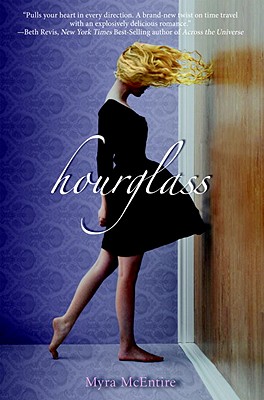
I absolutely adore the cover of Myra McEntire's debut novel, Hourglass. Not only does it have lovely, smooth lines, but for a little while it fools you into thinking the model is being sucked into something . . . and then you realize it's actually a girl, standing on the wall, with gravity obeying its natural course. Go 'head, turn it on the side, and then try to decide what photo magic they used to pull that one off. Photoshop? Wires? Giant wind machine? TIME TRAVEL?

Oh, right; that's what the book's about. Or more accurately, things of the past visiting a quite present Emerson Cole. Or maybe they're ghosts? Maybe Em's psychic and sees dead people? Whatever the answer, the situation is trippy.

Enter the uber-hot Michael (such a popular name for uber-hot characters). Tell us what he wants, what he really, really wants. What's he need, that Michael boy? History rewritten, that's what. Also? Em, because they are science-fictionally two halves of one whole. But do they belong together? Maybe. Maybe not. Because, you see, there's someone else in Emerson's future . . . 

The cover blurbs suggest the book induces all sorts of mood swings in the reader, and this is true, especially in the final fifty pages. Even I, a "first hero met should get the girl" loyalist, don't completely root for one boy over the other by much. Even I can see the wisdom and merit of a specific someone else winning that war, other than Michael. McEntire has done a fantastic job forcing me to consider the alternative, without embittering me toward it. That takes some mad skills, to sway a girl like me. I can only admire it and hope to learn from it.

I say this with a bit of a admission: Hourglass is a book . . . how to put this? Well, sometimes I felt myself reading a scene or a bit of narrative and feeling either proud or a little wary, because it's written so much like I myself would have written it. So that may mean I'm biased when I say I think either a Buy or Borrow appropriate.  The book isn't the most prime example of fantastic writing ever known to man, but it's entertaining, an emotional rush, and leaves you thinking about it hours later, which means it delivers on exactly what it promises.

Friday, September 16, 2011

Soulless


Being a book reviewer, sometimes, even with books I enjoy, there comes the trouble of pleasure being too much work. This time, I'm rather lucky to have avoided that in reading Gail Carriger's first Alexia Tarabotti novel, Soulless. 

Stay with me, because we're going to meander a bit.

First, I'm not sure why I thought Soulless a young adult novel (it isn't billed as such, so the fault lies totally with my assumption, not the marketing department), but I did. It isn't. Granted, it isn't any more sexually graphic than many current teen novels, but the I tend to view any book with an adult protagonist and and adult sexual prospects as being an adult book. Just wanted to throw that out there.

Secondly, The cover? Kind of brilliant. Beautiful and creative, and just plain fun. It's also completely accurate of what's inside the book. Alexia Tarabotti is a wonderful character. Picture, if you will, a demonic Mary Poppins (okay, with apologies to the angelic Dame Julie Andrews, some of us have always considered Mary Poppins a little demonic already): perfectly perfect, and perfectly preternatural, or in other words, "soulless".

It's been a while since a book kept me up late, not due to suspense or mystery, but just because I got such a giggle from reading it, so I have a couple of faint dark spots under my eyes for which to thank Soulless, but it was totally worth it.

Truly feisty--not the gimmicky, sub-par, not-fully-formed version so often seen in novels lately--Miss Tarabotti handles the Alpha wolf, flamboyant *cough*gay*cough* vampire best bud, and her strangely subservient spinster status within her alternate "paranomals are everywhere and accepted" Victorian history with considerable aplomb, graciousness, honestly, and a completely KICK ASS parasol.

I'm probably going to go out and BUY this book, and likely it's sequels in one fell swoop. I feel totally justified in recommending readers do the same.

Enjoy!

Friday, September 9, 2011

My Boyfriend is a Monster #04, Under His Spell


Today we here at Libri Ago: Book Lives will be tackling a first for us (review-wise), the graphic novel. Namely, My Boyfriend is a Monster #4: Under His Spell, written by Marie P. Croall and illustrated by Hyeondo Park.

Firstly, this title is clearly marked "Juvenile", which my mind equates with "tween"--that set of budding adolescents that haven't quite attained the true horror of teen-dom. Like anywhere between ages ten and thirteen.

Taking this into consideration, as well as the edition I had my eyes on being an Advance Reader Copy, and not available for sale until October 1st, I'd say the paperback purchase price of ten bucks is pretty fair for either newbie comic readers (in particular of the female persuasion), or reluctant readers of any sort. The narrative and plotline are so straightforward as to be no brainers, which in this case, I consider that a plus. Gotta consider target audiences.

While I enjoy graphic novels, I admit I don't have a ton of experience with them, other than supporting what I consider to be talented acquaintances--both pro and non--but I did enjoy the swoopy action, pop-out quality of several of Park's frames. Let me tell you from experience, shin bones do not bend that way, but it was a very cool style to see them do so anyway.

So, short version: If you happen to be a hard-core, long-time comic/graphic novel fan, maybe this isn't the best choice you could make for yourself, but then again, if you have a geek-in-training (I have three!) around the house, might as well give this one a go. You never know within what fandoms a future geek will major.

My Boyfriend's a Monster, #4: Under His Spell is available for purchase as of October 1st, 2011.

Tuesday, September 6, 2011

Saving Juliet


Have you ever seen the movie Lost in Austen, about the girl who falls though this crack in her bathroom wall into Jane Austen's Pride and Prejudice only to swap places with main character, Elizabeth Bennet? No? Well, make sure you do. It's lengthy, but worth it.

If you have seen the movie, you know things in fictional P&P Land start tripping up the moment Amanda steps a toe in it, and everything goes wonky.

Suzanne Selfors's Saving Juliet gives Shakespeare's classic Romeo and Juliet the same sort of treatment, and with thoroughly fastasmagoric results.

Seventeen year old Mimi, scion of the late, great theatre goddess Adelaide Wallingford and last hope for the historic Wallingford Theater hates acting, despite her pedigree and promise on the stage. As any teen faced with but one choice of futures, Mimi chafes against the strictures, plans, and outright momentum of her mother, who--from Mimi's viewpoint, only wants to live out her own failed dreams through her daughter. Complete with a stuck-up Surfer boy pop-star (for the ratings,dear) co-star in the form of one Troy Summer, avaricious understudies, and an heretofore unexperienced case of stage fright, Mimi does her best to play Juliet Capulet until she can escape for a few weeks in a planned vacation with her Doctors Without Borders-esque aunt.

Enter some very realistic and intuitive descriptions of Mimi's pre-cue panic attacks--which just keep getting worse, her inital crush on and being crushed by Troy Summer, and finally a magic charm which send Mimi and Troy both either back in time, or arguably, into an alternate universe wherein the feud between Montague and Capulet is alive and thriving.

Reading this book is a bit like seeing all the different charcters on days other than those Shakespeare chose to write about. Selfors gives great back-story about how the feud began, manages to humanize Juliet as a real thirteen-year-old girl, no matter the era, makes the reader totally buy Paris as a pervy old man, keeps Romeo from sounding like the most fickle guy alive, and eventually even makes heroes of many unheroic characters, and while the "script" often strays from Shakespeare's narrative (Romeo and Juliet never fall in love at all, at least possibly until after the book), and the language stays mostly contemporary, the book is all the better for these choices. Elizabethan English--as genius as Will's abilities were--would only have cluttered the alternate plot points and would have seemed almost gaudy in comparison to the very real and very ageless way Selfors handles the story.

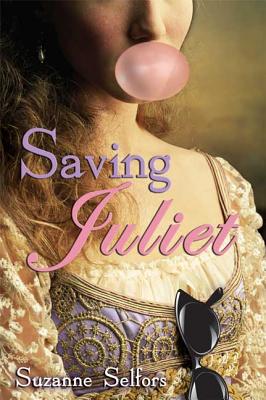
This is definitely a book in which the cover does the story a disservice. While Mimi is very much a modern teenager, she isn't flippant or blase, which is what that pink bubble-gum bubble and kitten shades say to me. Mimi has heart, just like her (normally) fictional counterparts, and that should be shown, too.

I got a kick out of this book with it's nimble narrative and ultimate happy ending. I engaged with it, and if I hadn't gotten it from my library in the first place, I'd have been happy with my choice to BUY it.

Saturday, September 3, 2011

Fablehaven Four: Secrets of the Dragon Sanctuary


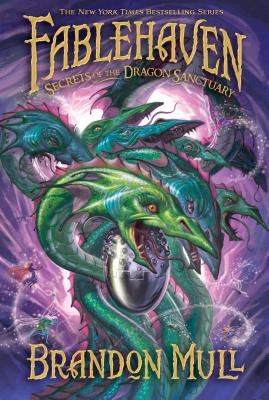
Brandon Mull has always given me consistently good reading experiences, but I gotta say, with the fourth installment of his Fablehaven series, Secrets of the Dragon Sanctuary Brandon Mull takes the art of misdirection and makes it his lapdog, complete with sissy rhinestone-studded collar.

I pride myself in being able to tag two-faced characters a good 85 per cent of the time, and I won't lie and say I didn't expect a particular character a little of being a double agent, but Mull did such a good job of endearing me to that character I desperately wanted to be wrong, and then when I wasn't, I felt just as crushed as the characters Two-Faced had betrayed so utterly.

Meanwhile, Mull craftily sets up a "replacement" for the role, so that without knowing it, and despite the upset of moments before, we're already rooting for the new character, envisioning the way the role can be chanced, stretched, made even better.

MG or not, it's a keeper. BUY it.

Thursday, September 1, 2011

Wildefire


Wildefire by Karsten Knight

Amethyst


Dude. No, Seriously. Dude. In case you wonder if I'm one of the "several people" mentioned below in Michelle's review who disliked the level of violence, rest easy. I'm cool enough with that. The GD-bomb being dropped on the first page I wasn't exactly happy about, or with the following profusion of profanity, but that wasn't what burned me on the first 135 pages of Knight's first novel.

In a nutshell, the whole thing up to that point seemed to scream at me, "Trying WAY too hard". Trying too hard to sound like an authentic teen, trying too hard to be "edgy", trying too hard to make the reader empathize with the main character. For the first 135 pages I just kept thinking, "No," and mentally shaking my head. Between the over-compensation and the wealth of passive voice (a personal peeve), I got knocked out of the story more often than I got pulled into it.

And then something changed. Suddenly the writing grew more confident, more comfortable with itself, and the story--which is very cool--began to shine through. Sure, there were still some features that felt contrived, but all in all, once Knight hit his stride, it was all downhill, baby. Easy. And intriguing. And curiouser and curiouser (even if I tagged the villian the second he/she showed . . . assuming the character is the real enemy (oooo!).

That's fantastic.

I will admit the copy I read was an ARC, an uncorrected proof, so my version may not have been the final say in how the book came out. Perhaps Knight tightens up those first several pages. Perhaps he fixes that confusing time-frame/flashback sequence at the end, and for goodness' sake, let's hope he learns to love a closing comma, because the phrasing suffers without it, but mostly, Wildefire has potential. You'd probably be pretty safe BUYING it, or BORROWING it, either way.

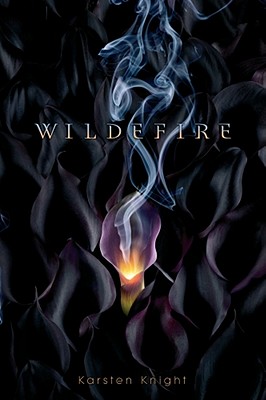
P.S. Gorgeous cover.

Michelle

★★★½

I found Karsten Knight's Wildefire a refreshing take on paranormal romance since it deals more with plot and characters than many of the I-loved-you-before-I-even-saw-you books out now.

There were some things I thought the author did well with his debut, and others that were poorly done or that I really didn't like. But the story is compelling, especially since it incorporated gods and mythology from across the globe.

The plot itself—reincarnated gods meeting each other at a private school in the California redwoods—might seem like a rather popular recent middle grade series *cough*Percy Jackson*cough* but this one is completely different in tone and target audience. There is little chance that these two would be mistaken for each other.

The opening sequence is somewhat violent, and though it didn't bother me too much, I've heard from several others who really didn't like it. I saw it as setting up the characters for the rest of the story. The first few chapters are basically back story, there to establish what got Ash to the boarding school, so the subsequent actions seem fitting with the beginning. 

I wouldn't say to necessarily let the first chapter dissuade you from reading the rest of the book, but there is (perhaps worse) violence later on, so it's definitely something to consider.

My biggest peeve, however, was that Ash often sounded masculine throughout the book. I'd originally thought she was a jock tomboy from her actions and dialogue, but later she's described as girly and cute, and those two didn't mesh for me. 

While I enjoyed most of the book, I really struggled with the climax of the story. It felt a bit overblown, like so much was happening that the characters got lost in the action.

I'm hoping the sequel is better because I love the revelation near the end that one character is actually my favorite god in all of human mythology. There are so many ways to have fun with that character.

Sunday, August 28, 2011

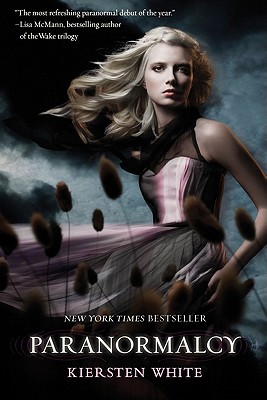
Paranormalcy


You know what I'm a big fan of? Cotton candy. It's fluffy, sweet, can have multiple flavors and colors, and I DO NOT SHARE IT.

Kiersten White's debut novel is exactly the same, except for that last bit, because I'll be only too pleased to share Paranormalcy with my friends. Granted, I probably wouldn't share it with my children, but that's more because they're all boys who have about much interest in funny, airy, girlie stories as they would in opera.

That's okay, though. More delicious Evie for us, right?  So, the quick and dirty?  Fun and funny focal point Evie has spent the majority of her sixteen years dispensing humane (oh, the irony) justice and control to paranormals, and with a light touch. Her world isn't the usual, but it works for her, and for the most part she's happy, and she feels like she belongs and is loved. Then of course, Something Bad happens to make Evie question her lifestyle, beliefs, safety, and even her race, but without losing her sparkling sense of humor.

There's a boy. Of course, there's a boy. What's the story of a in-indentity-crisis teenaged Barely-Been-Kissed without a boy? A cool boy, both figuratively and literally, as Lend appears to Evie to be made of water (though he isn't . . . ah, not exactly).  Lend needs to be saved, and because Evie intends to help out with that, Evie needs a little saving, herself, possibly from herself.

If Evie doesn't find enough strength in her old life, will she be able to keep her world enough intact to create a new one?

I THOROUGHLY enjoyed Paranormalcy, and am totally looking for to its sequel, Supernaturally.

Monday, August 22, 2011

Mister Monday


Okay, so I'm going to be easy like Sunday morning and just say, I really dug Garth Nix's Keys to the Kingdom starter, Mister Monday. I'm not saying it's my favorite book ever, but I definitely enjoyed the atmosphere, which I think compares to a bit of Neil Gaiman's Neverwhere smooshed together with Diana Wynne Jones's Chrestomanci books i.e. stark children's adventures with a no-holds-barred take on a young hero's lack of limitations.

Nix excels at creating a completely credible kid hero, Arthur Penhaligon. Arthur is a normal kid, not some super-powered, hyped-up X-boy. His power comes from the strength of his heart and his will. He has no ego to speak of, but is also not a whiny baby. He's comfortably aware of his limitations, but he's also aware of his loved ones and those who loves, and for them he's willing to believe and attempt anything, including wrest control of a creation dimension from its erstwhile caretakers.

With an unofficial, way-before-its-peak form of Steampunk, Nix has blended ephemeral magic with shiny, creepy and/or glorious mech, and a fantastic set of primary and secondary characters.

I'm looking forward to the next book, Grim Tuesday, and if I hadn't borrowed Mister Monday from the library in the first place, I'd have BOUGHT it. Knowing how much I like the first book, I might have to go pick up both of them.

Tuesday, August 16, 2011

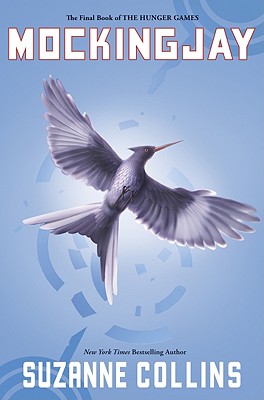
Mockingjay


Spoilers annoy me; I avoid them like the plague. Sometimes you get blindsided by them, though. I heard a few  of the most gut-wrenching details from Suzanne Collins's final Hunger Games novel, MockingJay before I managed to read it, which sucked out some of the impact the book had on me.

Still, I really enjoyed it. The end fulfilled the potential the series had built up. It had a certain exhausted poignancy about it. The brilliant character development begun in the first two novels carried through to a nice conclusion, the tone of setting changed without losing the tone of the first or second novels, and all in all, Collins rocked it, and like any truly empathetic story, readers either love or hate how it all turned out. Either way, passion is assured, whether they feel the final chapters of worthy their dedication or a betrayal thereof.

If you are one of the few book people not to hear of and/or read this book already, or are a non-book person who reads a book a year, I say you get your hands on the full series, including BUYING Mockingjay. It's earned a re-read, whether you're a "young adult" or not.

Saturday, August 6, 2011

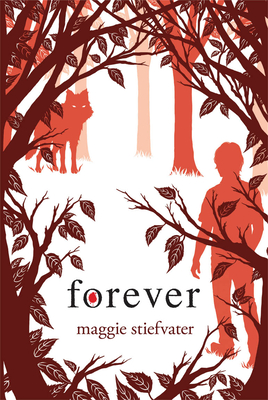
Forever


Maggie Stiefvater's Shiver trilogy is one of the few series I've loved, but do not own, and I think it's because it intimidates me. The fluid insertion of poetic imagery (I loved Sam's description of  something being as "thin as a lie") speaks of such easy talent that a reader can't help but be wooed.  Whether you're attracted to Grace, Sam, Cole, or Isabel, it doesn't matter, because each character has his or her own magnetism--both the kind that draws in, and the kind that repels.

In Forever, Stiefvater ties up all the severed ends cut apart in the second installment, Linger, and rocks out some very nice, natural-feeling bows.

A personal (well, more personal, since I suppose reviews are already seriously personal) note? Even the dedication and acknowledgement rang with gorgeousness and made me cry a little. How is that in any way fair?

I'm on the fence about whether or not it's a Buy or Borrow, but only for myself. For the rest of you, it's not so much a gamble to advise you go ahead and support your local indie bookstore* with some cash on behalf of this book.

*Oh, look, I've even included a handy IndieBound link in the book title.