Background

Showing posts with label Bypass. Show all posts

Wednesday, October 5, 2011

The Book that Shall Not Be Named


I argued with myself for a couple of days what to do about this book. I'd been reading it specifically for the purpose of reviewing it, as it isn't . . . uh, the reading level I tend to choose . . . but then, I'd been reading it to decide its qualities as a book for reluctant readers, not for devourers of books, as am I.

The writing was painfully over-explanatory and full of telling rather than showing. Okay, so not fantastic, but again--reluctant reader. Sometimes a reader needs to be lead slowly by the hand the whole way. Even if that makes the whole book feel like a bunch of people standing motionless on a stage, reading their stage directions right along with their lines so the audience knows what emotion to give the words. "Wooden" doesn't even begin to describe it. I kept reading, anyway.

And then, in a sort of burst, the heroine of the book sort of . . . morphed into the exact opposite of what any parent would hope his or her daughter become by way of fairness and morality. I won't go into it, or I'll get angry all over again.

But I'll say this: reluctant-reader-targeted writing I can deal with, even though I probably won't enjoy it. Encouraging readers to believe their lives are worthless unless they're in the top tier of popularity (despite having three very LOYAL friends), that cheating is a completely desirable means to attaining popularity (especially when it would gain them a place doing what they've wanted their whole life--or at least the last month when they suddenly became good at it), and disowning a parent for PARENTING and giving them very good advice, just because it's not what they want to hear?

No. Just no. No way, no how, ever, ever no.

That's when I stopped reading, even though I was less than half-way through the book. Even though I hadn't been reading it for myself in the first place.

And that's why I won't be giving out the name of this book. I don't want to promote it at all. If you're a parent, or another conscientious reader, you can comment, DM, or whatever me, and I'll give you the title so you can avoid it, or make sure it doesn't end up in hands you'd rather not have it, but I won't be putting it into black and white here.

That's my compromise.

Friday, August 26, 2011

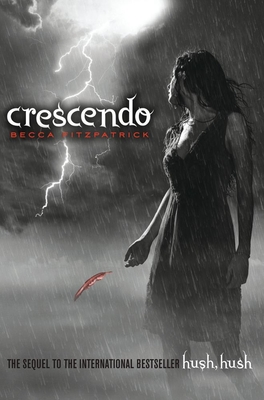
Crescendo


I read Becca Fitzpatrick's first novel, Hush, Hush soon after its release somewhat due to curiosity about the premise, somewhat due to a few teens I know having gushed over it. My general impression was, "Meh," with a shrug of my shoulders. On the one hand, there were some really good elements; a supremely-hot-but-not-entirely-trustworthy boy, creepy bad guys, and a girl who doesn't have much of a clue about what's going on. I can forgive that, but unfortunately, it was all a little too patterned, in a way I've seen all before, so the book--aside from from scorching descriptions of possible boy-toy, Patch--didn't stand out for me.

I can't say the same about Hush, Hush's sequel, Crescendo. It totally stood out for me . . . just not for the kind of reasons one would want. Firstly, main character Nora has not come out of the first book much more informed, but she's honed her ability to whine to a fine point. Whenever boyfriend Patch--with whom she's supposedly soul-mated--fails to deliver what she wants, Nora complains about what a horrible relationship they have, how much she should be pitied, and how Patch isn't sacrificing enough to make their lives more idyllic (despite him having given up his life's dream of getting out of his tortured existence in the previous book, for the sake of his love for her, and becoming her assigned protector, besides).

In the meantime, other lives around Nora are falling apart, but she's too self-centered to noticed, or give those circumstances any attention, except when it benefits her agenda du jour.

Simply put, I just can't like this girl. I'm supposed to. I'm supposed to empathize with her, but it's too difficult when she's got a smokin' boyfriend who adores her, and all she can do is think about what she still wants.

Borrow, if you must, but really? Bypass.

Thursday, August 18, 2011

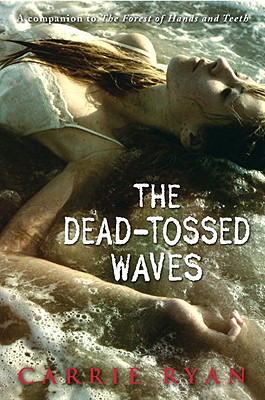
The Dead Tossed Waves


in·de·ci·sive
Function: adjective
1 : not decisive or final <an indecisive battle>
2 : finding it hard to make decisions <an indecisiveperson>

fick·le
Function: adjective
: likely to change frequently without good reason :<fickle friends> 

    un·sym·pa·thet·ic

    adjective /ˌənˌsimpəˈTHetik/ 


    1. (of a person) Not friendly or cooperative; unlikeable
      • - a totally unsympathetic character


Before I get started on the current book review, let me just say I loved Carrie Ryan's debut novel, The Forest of Hands and Teeth. LOVED. As many other readers, I was completely taken with the emotionally horrific tone that relied on heartbreak and bleak outlooks rather than gore or mindless terror. The book perfectly captured the subtlety and true frights of a nightmare world, and--in my opinion--settled in the same strata as Stephen King's more thriller-oriented offerings such as his Dark Tower series and his cult classic, The Talisman (a personal favorite of mine).

One doesn't have to have read Ryan's Forest to engage with its companion novel (set some fifteen-ish years later), The Dead-Tossed Waves. In fact, not having read Forest might be considered a perk, as the first 300 or so pages of Waves so closely mirrors its predecessor, they could almost be the same book. Swap some names around, tweak the setting, and voila! They're interchangeable.  Or, if you need a visual aid, please refer to Mr. Swayze's version of this point:


Thank you, Patrick. Second verse, same as the first, indeed!

All that aside, the reasons for the definitions above. They describe my main impressions of the narrator and main character, Gabry. While the writing style--with the exception of some places I felt tried too hard--holds up in quality to Ryan's first offering, the things that kind of irked me in Forest have returned in Waves to explode into full-on loathing. In the two-or-less weeks of Gabry's story she waffles between "loving" two boys, wanting and not wanting a different life, being petulant or dismissive of things she doesn't appreciate, and cowardice and courage . . . sometimes within minutes of each other. She wants Boy A she's known her whole life, no, wait, she wants Boy B she just met and who keeps freaky company. No, no, Boy A is going to kiss her! She wants him! No, Boy B, who's just brushed her hand with his!  She wants to stay safe in her little village. She wants to escape her little village. She wants to live/ there's no point to living anymore!

What's meant to create conflict, suspension and a sense of always being on the cusp of something epic only irritates and makes Gabry seem like one of the most stupid girls on the planet. Are we supposed to think the mind of a post-Return youth is conditioned towards such blatant abuse of free will? That people are so desperate they'll clutch at whatever is closest to their grasp, just like the constantly-moaning, constantly hungering Mudo? I don't. But then, my loyalty streak is as wide as my stubborn streak.

I will put this in the positive column, however: I very much enjoyed the addition of a certain sect of deviant characters. I won't spoil anyone with how or why I say 'deviant', but I don't mean it in the pop-culture sense of the word, but the traditional meaning. I thought their inclusion was a very nice foil layer, and their actions went far to ensure some doubt about the mental state/noble motivations of one of the potential suitors. Niiice.

Unfortunately, that admiration isn't enough to get The Dead-Tossed Waves out of a Bypass. Sorry.

Sunday, August 14, 2011

Darkest Mercy


What do you do if you've read a book by an author you genuinely find admirable and a lovely person, but you find the book is only so-so? What do you say if you then are bound to post a review said mediocre offering?  I guess--if you're me--you put it off a couple days and then you post the following:

Melissa Marr is an enjoyable writer who (as I've said in a previous review) has a history of hits and misses with me. I hate to say it, but Darkest Mercy is a miss. It isn't good when I repeatedly think to myself, "Yes, mmm-hmm, yeah, already know this. Can we get on with it, already?", only to eventually ask, "Wait, what? That was the big bang? Did I miss it when I blinked a second ago? No?".

At best, Darkest Mercy is an okay book with an awesome cover, some pretty people expressing overwrought angst (yes, there is such a thing), and though it has little to offer by way of an actual story line, alienated-but-romantic teens will slurp it up like an energy drink.

I'm not a fan of energy drinks (hello, yucky flavor and acidic aftertaste!), so this one gets a Borrow from me, which would be a Bypass if it weren't for teen hordes everywhere, of which I am a fan.

Friday, July 29, 2011

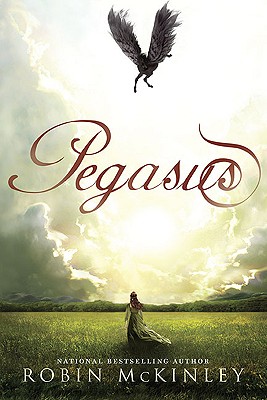
Pegasus


It wouldn't be honest to say Robin McKinley's Pegasus was a fast read for me. In fact, it took me two to three times longer than I'd anticipated.

I can't say it was an easy read, either, as some parts were . . . well, not exactly difficult, but more like tedious.

I can't even simply say I enjoyed the book. I wouldn't say that. Because while the writing was experienced, sometimes extremely evocative, and somehow ripe, there were also places where the writing killed off the story, which is about a young girl (starting out with a genuinely childish twelve-year old, and coming in one of the many "Hurry up and flounder" moves, to fifteen-nearly-sixteen/adulthood) being magically (spirtually? mentally? unusually?) bound to her royal Pegasi counterpart, and what the surprising differences to historical bindings this one poses. Of course there's a bad guy who hates it, a thoroughly bad bad guy we all want to smother in his own supercilious robes, and there are wise monarchs, loving maternal figures, and the much-lauded Third-party-OR-ARE-THEY?!?! threats from great Pegasi-and-human-eating beasts.

There, in fact, 404 pages of these things. Or rather, there are 300 pages leading up to these things, 79 pages of the actual STUFF, and then 20 pages of WHOA, CRAP!, followed by 5 blunt pages of me getting very, very angry, because I--a hardcore devourer of books--have just toiled for at least three-fourths of this book to get to the last page to find . . . nothing.

You remember the Looney Toons wherein Wile E. Coyote would be chasing the Road Runner around, hellbent on (I . . . don't actually know. Did he want to eat him? Take back his pride? Square Dance?) catching that bird when suddenly he finds himself three feet out over the edge of some cliff-edge he'd have sworn hadn't been there two seconds ago? You see it before he does, but then he looks down, looks back up at you, and for the two or three moments he has before he waves, gulps, and begins to fall, you both know the very worst of what's about to happen.

That's page 404 of Pegasus. It's not that I don't like books that leave off in the middle of the action, with no real sense of having accomplished anything--wait, no, that's exactly what it is.  I know I'm always harping about book that could have been tightened up, I guess that's just my style, but if a book takes 400-some pages to just get to the big UH-OH, and then either plans on letting you hang, or means to make you wait for a sequel, my reaction is going to be something to the tune of, WTHades, people!? Cut out 200 pages, put in 200 OTHERS to finish out the frakking story, and let's get a real book out of these pulped trees, already!*

I didn't like the book; I liked the story, but I'm not sure I liked it enough to tip the scales. If you're cool with unnecessarily dense run-around, however well-done, you could borrow this from the library, but otherwise, I advise you BYPASS it.

*I have now looked around to find Pegasus does indeed have an intended sequel, which is good for those who find the ending enough of a cliff-hanger to wait for it, but still doesn't really do anything to change my opinion--so I guess it's good it's purported McKinley herself admits readers will hate her for how the book ends, and she's got a good sense of humor about it.

Sunday, July 10, 2011

Tiger's Curse


Tiger's Curse  by Colleen Houck reads a bit like a list of things NOT to do in a debut novel, including almost all "telling" rather than "showing", excessive use of weak, generic adverbs (and redundant description, in general), awkward plot transitions, contradictory conclusions, and much, MUCH, extraneous narrative, sometimes poorly disguised as introspection by the main character.

I wanted to enjoy this book, I did. I mean, look at that gorgeous cover! And tigers! Tigers are COOL, cursed tigers, even better. India? Great! I'd like to know more about India, and it isn't an overdone setting. Reading about it like I'm surveying a shelf of BROCHURES on India? Not so much.

In the end, I couldn't overlook the inexperienced writing enough to enjoy such a good premise--namely a normal girl recruited by an Indian gentleman, a many-armed goddess, and a tiger prince to help lift a centuries-old curse.

So, could Tiger's Curse have been a great book? YES. Was it? No, I'm sorry to say it was not. It get's a Bypass.

P.S. I must admit, I did rather like the character Phet. He made me giggle.

*Disclaimer A. After reading much of the book and wondering how an editor would knowingly let an author put out a book with so much still to be done, I scanned the back flap copy and Acknowledgments pages hoping to find an answer, and I kind of did.

Originally a self-published eBook*, Tiger's Curse enjoyed success and was then picked up by a publishing company, who then--in my opinion did the author a disservice by not encouraging her and guiding her in polishing the novel, thereby reaching its potential, before hitting the mainstream market. A friend of mine, formerly an editor at a publishing house, explained a common practice for these self-pubb'd eBook pick-ups is to edit solely for typographical errors, possibly due to First Print rights already having been taken, a concept I understand in theory, but still feel is negligent and morally shady. Obviously, this is speculation on our parts, but such a reason would go a long way in making me understand, if not necessarily agree with it.


**Disclaimer B: I don't feel self-published authors are in any way inferior to traditionally published authors. Just the opposite actually. If you want to see some fantastic, enviably talented self-, indie-,e-published authors, boy have I got a list for you.