Background

Showing posts with label library. Show all posts

Tuesday, February 21, 2012

The False Princess

★★★½

The False Princess by Eilis O'Neal

Talk about traumatizing. Grow up thinking you're one thing then being told you're another while being forced from your home and replaced by the "real" you . . . Yeah, I'd be a little upset. The False Princess gives us just such a situation with the unfortunate was-a-princess-but-not-really Sinda.

In what could have easily been a run-of-the-mill princess story, O'Neal steps it up a notch about halfway in with a twist and some added development. I'm not talking about the not-a-princess thing. That happened right at the beginning. Instead of sticking with a rather cut-and-dry plot, the author changes things up, thus adding depth and complexity to the characters and the entire plot.

While I appreciated the surprising plot, the writing felt like it needed a little bit more development. The pace was on the slow side and I found myself skimming large chunks of Sinda's thoughts. Explaining events or situations the reader should—and probably did—figure out on their own made the narrative cumbersome.

Another area that wasn't fully developed was the magic system in the book. In any fantasy world there is generally a) magic, b) its own mythology and hierarchy of gods, or c) both. It is vastly important to create a clear and solid system for those elements because everything in this world affects how people act and interact within their own community and society as a whole. People who possess magic act differently than someone who lives in a world where magic doesn't exist. Cultures that worship multiple gods will work differently than those that are atheist. 

The False Princess is that this world has magic and deities, but we're never given a clear understanding of how that works. Yes, there are oracles who prophecy future events, but where do they get their power? Was there only one in the whole world? How were they chosen?

Even more important, who is this "Nameless God" mentioned throughout the book but never given any other thought? You can't offer such a tantalizingly named deity without giving us more. Why is he nameless? Does someone know his name? Do the other cultures pray to the same God? The fact that the Nameless God was mentioned but didn't do anything in the book left me more than a little disappointed. 

I would have to say the book's biggest flaw is moralizing, with the overdone symbolism of Sinda going from princess to commoner, and being mistreated by the crown throughout. The idea of royalty not caring for the common man has been done before. Quite a lot, actually, and done very well. In The False Princess, it comes across forced and a little heavy-handed. As a reader, I want a good story, not a lesson in ethics.

All that said, it's a nice book and one that I'd recommend for a light read. Since this is a debut, I hope the author's next work comes out a bit deeper and more polished.


PS Am I the only one who keeps reading the main character's name as Simba? Rawr.


PSS Yes, I do like hyphens. 


PSSS And mythology. LOVE me some mythology. There's so much fun to be had playing around with gods and mortals. Just imagine the possibilities. Hence, my disappointment.

Thursday, January 12, 2012

Clockwork Prince


Somewhere in my brain, I'd already reviewed Clockwork Prince, the second book in Cassandra Clare's THE INFERNAL DEVICES (prequel series to Clare's hugely popular THE IMMORTAL INSTRUMENTS series), but maybe I just dreamed that, or maybe my brain referred to me mentioning the absolute hot-boyness of cover character James "Jem" Carstairs . . . because I would definitely have mentioned it, trust me.

But I guess, I didn't, and far be if from me to argue with the Libri Ago archives.  So! On with the review!

Needless to say, I bought the book. I'd have bought the book if I hated it, just for that cover, and buying it story-unread is next to the same thing, there's proof.

However, I did enjoy the story, though as is often the case, it took me a little while to get over my personal distaste regarding Clare's style of narrative. I generally love her dialogue, but many a narrative sentence is mentally tightened, de-passive-voiced, or unrepetitivized (yes, I'm making up words; I'm allowed) whilst I read. Also, as seems par for the course with a Clare book, the things I loved, I loved, but the things I disliked, I really disliked, so for the sake of keeping things straight, I'll divide the two.

Loved:

*Will's vulnerability and subsequent hope. In the beginning, we only know Will's main goal in life seems to make himself appear utterly unlikable, forget lovable. We find out why, and we also find out that even though Will is forced to play the game with certain parameters, he's by no means given up changing things.

*Jem's fragility, backed by optimism. The boy is dying, and yet, he keeps himself open to the happiness to be had in his short life. Of course, the fact that Jem is so very good makes me suspect him of every foul betrayal in the world, but we'll see. Maybe Clare will cut us a break.

*The revelation that husband and wife actually love one another very much, and have been victims of miscomunications.

*A certain warlock. 'Nuff said.

Disliked:

*Tessa's fickleness. I don't care if she's the heroine. I don't care of she's not entirely human, or if she's under a lot of pressure, or if yes, her choices of love interest are particularly amazing, I cannot buy her having the same intensity of feelings--especially physical--for both Will and Jem. Sometimes I felt as if I should see her being more drawn to Will, but it was a weakly written bit. I make no secret of it. I don't like Tessa, and I don't think she's a very well-developed character.

* Jessamine, but that's a no-brainer. How any girl could be that naive voluntarily . . . sheesh.

*Like I said, the narrative, which is sometimes wont to wander over hill and dale.

In general, the book definitely hit-it-off better with me than the first TID novel, and has accomplished garnering my interest in the conclusion, Clockwork Princess. I said of Angel, if you bought the other Clare books, buy this one out to complete your set. if you didn't, make use of you library card, and enjoy!

Tuesday, November 29, 2011

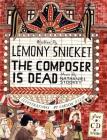
The Composer Is Dead


★★★★★★★*

The Composer Is Dead by Lemony Snicket

The moment I saw Lemony Snicket's name on the cover of The Composer Is Dead at the library the other day, I knew I had to read it. I knew it would be funny; what I wasn't expecting was this musical masterpiece.

The story is somewhat basic: a composer has been murdered, and the detective must sound out the man, er, instrument who committed the crime. The text, however, isn't what makes this book so amazing.

This isn't just a picture book, nor is it just an audio book or just a soundtrack; it is an experience. The book is funny enough on its own, but play the accompanying cd with soundtrack, and it's even greater. The experience, however, doesn't reach fever pitch until you add in Snicket's exceptional narration (also included on the cd).

Daniel Handler, the man behind the Snicket, must have played in an orchestra at some point in his life. It's the only way to explain how all of the humor in The Composer Is Dead is spot on.

While marketed as a children's picture book, young children won't get most of the jokes. Instead, the musically inclined adult reading (or listening) to the book will be laughing to the point of hyperventilating. 

Don't believe me? See the book trailer, below, which demonstrates a bit of what I'm talking about.


I played this book for my stepmom, a concert cellist cum cello instructor. She laughed and nodded at all the jokes and one-liners, and then immediately went out to purchase a copy to share with her students.

I highly recommend this book as a gift for the music major/orchestra teacher/flautist in your life. If they've played in an orchestra, even just in high school, they will be rolling by the time the experience ends. Then buy a copy for yourself.

*Because this book deserves much more than 5 stars.

Monday, September 26, 2011

Across the Universe


I have heard a lot of gushing over quite a swath of time about Beth Revis's novel, Across the Universe. I mean, a lot.

I heard it's a gorgeous blend of mystery and science fiction. I heard it's heart-rending. I heard the potential love story hits hard. I heard the world-building came through both lush and realistic (for a futuristic spaceship).

I don't think it was good for me, hearing all that ahead of reading the book for myself. I found the mystery mediocre, and disappointingly easy to figure out far ahead of the characters. Maybe I was meant to, I don't know. The descriptions of the ship were good, and somewhat disgusting, in a way I appreciated (though if I'd read the word "relish" in any of its forms again, I could have growled). The love story appealed to me more from Elder's viewpoint than Amy's, but I suppose that also makes more sense, as Elder was far more into it, not being in the midst of a familial crises the same sort as Amy's.

All-in-all, I think I'd just expected too much from the book and when I concluded it was only "pretty decent", I felt let down. It annoys me I have to make an excuse for my opinion. It annoys me I have to review it on a curve, so to speak.

Some people will love this book. It will be everything they want. It, unfortunately, was not for me. Read the cover blurb, read a couple of pages in the middle, then decide for yourself if it's worth a Buy or a Borrow.

Sunday, September 18, 2011

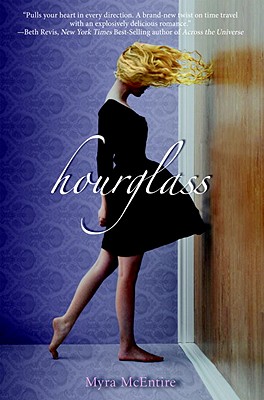
Hourglass


I absolutely adore the cover of Myra McEntire's debut novel, Hourglass. Not only does it have lovely, smooth lines, but for a little while it fools you into thinking the model is being sucked into something . . . and then you realize it's actually a girl, standing on the wall, with gravity obeying its natural course. Go 'head, turn it on the side, and then try to decide what photo magic they used to pull that one off. Photoshop? Wires? Giant wind machine? TIME TRAVEL?

Oh, right; that's what the book's about. Or more accurately, things of the past visiting a quite present Emerson Cole. Or maybe they're ghosts? Maybe Em's psychic and sees dead people? Whatever the answer, the situation is trippy.

Enter the uber-hot Michael (such a popular name for uber-hot characters). Tell us what he wants, what he really, really wants. What's he need, that Michael boy? History rewritten, that's what. Also? Em, because they are science-fictionally two halves of one whole. But do they belong together? Maybe. Maybe not. Because, you see, there's someone else in Emerson's future . . . 

The cover blurbs suggest the book induces all sorts of mood swings in the reader, and this is true, especially in the final fifty pages. Even I, a "first hero met should get the girl" loyalist, don't completely root for one boy over the other by much. Even I can see the wisdom and merit of a specific someone else winning that war, other than Michael. McEntire has done a fantastic job forcing me to consider the alternative, without embittering me toward it. That takes some mad skills, to sway a girl like me. I can only admire it and hope to learn from it.

I say this with a bit of a admission: Hourglass is a book . . . how to put this? Well, sometimes I felt myself reading a scene or a bit of narrative and feeling either proud or a little wary, because it's written so much like I myself would have written it. So that may mean I'm biased when I say I think either a Buy or Borrow appropriate.  The book isn't the most prime example of fantastic writing ever known to man, but it's entertaining, an emotional rush, and leaves you thinking about it hours later, which means it delivers on exactly what it promises.

Friday, September 16, 2011

Soulless


Being a book reviewer, sometimes, even with books I enjoy, there comes the trouble of pleasure being too much work. This time, I'm rather lucky to have avoided that in reading Gail Carriger's first Alexia Tarabotti novel, Soulless. 

Stay with me, because we're going to meander a bit.

First, I'm not sure why I thought Soulless a young adult novel (it isn't billed as such, so the fault lies totally with my assumption, not the marketing department), but I did. It isn't. Granted, it isn't any more sexually graphic than many current teen novels, but the I tend to view any book with an adult protagonist and and adult sexual prospects as being an adult book. Just wanted to throw that out there.

Secondly, The cover? Kind of brilliant. Beautiful and creative, and just plain fun. It's also completely accurate of what's inside the book. Alexia Tarabotti is a wonderful character. Picture, if you will, a demonic Mary Poppins (okay, with apologies to the angelic Dame Julie Andrews, some of us have always considered Mary Poppins a little demonic already): perfectly perfect, and perfectly preternatural, or in other words, "soulless".

It's been a while since a book kept me up late, not due to suspense or mystery, but just because I got such a giggle from reading it, so I have a couple of faint dark spots under my eyes for which to thank Soulless, but it was totally worth it.

Truly feisty--not the gimmicky, sub-par, not-fully-formed version so often seen in novels lately--Miss Tarabotti handles the Alpha wolf, flamboyant *cough*gay*cough* vampire best bud, and her strangely subservient spinster status within her alternate "paranomals are everywhere and accepted" Victorian history with considerable aplomb, graciousness, honestly, and a completely KICK ASS parasol.

I'm probably going to go out and BUY this book, and likely it's sequels in one fell swoop. I feel totally justified in recommending readers do the same.

Enjoy!

Saturday, September 3, 2011

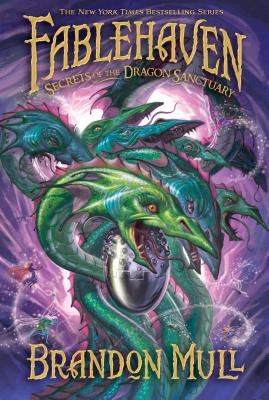
Fablehaven Four: Secrets of the Dragon Sanctuary


Brandon Mull has always given me consistently good reading experiences, but I gotta say, with the fourth installment of his Fablehaven series, Secrets of the Dragon Sanctuary Brandon Mull takes the art of misdirection and makes it his lapdog, complete with sissy rhinestone-studded collar.

I pride myself in being able to tag two-faced characters a good 85 per cent of the time, and I won't lie and say I didn't expect a particular character a little of being a double agent, but Mull did such a good job of endearing me to that character I desperately wanted to be wrong, and then when I wasn't, I felt just as crushed as the characters Two-Faced had betrayed so utterly.

Meanwhile, Mull craftily sets up a "replacement" for the role, so that without knowing it, and despite the upset of moments before, we're already rooting for the new character, envisioning the way the role can be chanced, stretched, made even better.

MG or not, it's a keeper. BUY it.

Friday, August 26, 2011

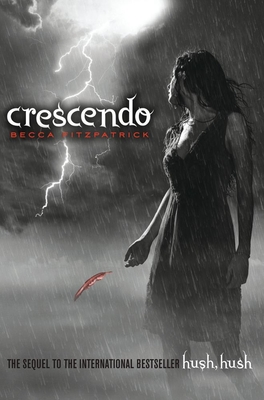
Crescendo


I read Becca Fitzpatrick's first novel, Hush, Hush soon after its release somewhat due to curiosity about the premise, somewhat due to a few teens I know having gushed over it. My general impression was, "Meh," with a shrug of my shoulders. On the one hand, there were some really good elements; a supremely-hot-but-not-entirely-trustworthy boy, creepy bad guys, and a girl who doesn't have much of a clue about what's going on. I can forgive that, but unfortunately, it was all a little too patterned, in a way I've seen all before, so the book--aside from from scorching descriptions of possible boy-toy, Patch--didn't stand out for me.

I can't say the same about Hush, Hush's sequel, Crescendo. It totally stood out for me . . . just not for the kind of reasons one would want. Firstly, main character Nora has not come out of the first book much more informed, but she's honed her ability to whine to a fine point. Whenever boyfriend Patch--with whom she's supposedly soul-mated--fails to deliver what she wants, Nora complains about what a horrible relationship they have, how much she should be pitied, and how Patch isn't sacrificing enough to make their lives more idyllic (despite him having given up his life's dream of getting out of his tortured existence in the previous book, for the sake of his love for her, and becoming her assigned protector, besides).

In the meantime, other lives around Nora are falling apart, but she's too self-centered to noticed, or give those circumstances any attention, except when it benefits her agenda du jour.

Simply put, I just can't like this girl. I'm supposed to. I'm supposed to empathize with her, but it's too difficult when she's got a smokin' boyfriend who adores her, and all she can do is think about what she still wants.

Borrow, if you must, but really? Bypass.

Monday, August 22, 2011

Mister Monday


Okay, so I'm going to be easy like Sunday morning and just say, I really dug Garth Nix's Keys to the Kingdom starter, Mister Monday. I'm not saying it's my favorite book ever, but I definitely enjoyed the atmosphere, which I think compares to a bit of Neil Gaiman's Neverwhere smooshed together with Diana Wynne Jones's Chrestomanci books i.e. stark children's adventures with a no-holds-barred take on a young hero's lack of limitations.

Nix excels at creating a completely credible kid hero, Arthur Penhaligon. Arthur is a normal kid, not some super-powered, hyped-up X-boy. His power comes from the strength of his heart and his will. He has no ego to speak of, but is also not a whiny baby. He's comfortably aware of his limitations, but he's also aware of his loved ones and those who loves, and for them he's willing to believe and attempt anything, including wrest control of a creation dimension from its erstwhile caretakers.

With an unofficial, way-before-its-peak form of Steampunk, Nix has blended ephemeral magic with shiny, creepy and/or glorious mech, and a fantastic set of primary and secondary characters.

I'm looking forward to the next book, Grim Tuesday, and if I hadn't borrowed Mister Monday from the library in the first place, I'd have BOUGHT it. Knowing how much I like the first book, I might have to go pick up both of them.

Thursday, August 18, 2011

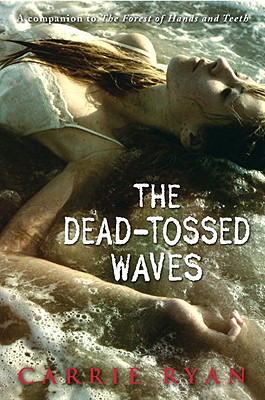
The Dead Tossed Waves


in·de·ci·sive
Function: adjective
1 : not decisive or final <an indecisive battle>
2 : finding it hard to make decisions <an indecisiveperson>

fick·le
Function: adjective
: likely to change frequently without good reason :<fickle friends> 

    un·sym·pa·thet·ic

    adjective /ˌənËŒsimpəˈTHetik/ 


    1. (of a person) Not friendly or cooperative; unlikeable
      • - a totally unsympathetic character


Before I get started on the current book review, let me just say I loved Carrie Ryan's debut novel, The Forest of Hands and Teeth. LOVED. As many other readers, I was completely taken with the emotionally horrific tone that relied on heartbreak and bleak outlooks rather than gore or mindless terror. The book perfectly captured the subtlety and true frights of a nightmare world, and--in my opinion--settled in the same strata as Stephen King's more thriller-oriented offerings such as his Dark Tower series and his cult classic, The Talisman (a personal favorite of mine).

One doesn't have to have read Ryan's Forest to engage with its companion novel (set some fifteen-ish years later), The Dead-Tossed Waves. In fact, not having read Forest might be considered a perk, as the first 300 or so pages of Waves so closely mirrors its predecessor, they could almost be the same book. Swap some names around, tweak the setting, and voila! They're interchangeable.  Or, if you need a visual aid, please refer to Mr. Swayze's version of this point:


Thank you, Patrick. Second verse, same as the first, indeed!

All that aside, the reasons for the definitions above. They describe my main impressions of the narrator and main character, Gabry. While the writing style--with the exception of some places I felt tried too hard--holds up in quality to Ryan's first offering, the things that kind of irked me in Forest have returned in Waves to explode into full-on loathing. In the two-or-less weeks of Gabry's story she waffles between "loving" two boys, wanting and not wanting a different life, being petulant or dismissive of things she doesn't appreciate, and cowardice and courage . . . sometimes within minutes of each other. She wants Boy A she's known her whole life, no, wait, she wants Boy B she just met and who keeps freaky company. No, no, Boy A is going to kiss her! She wants him! No, Boy B, who's just brushed her hand with his!  She wants to stay safe in her little village. She wants to escape her little village. She wants to live/ there's no point to living anymore!

What's meant to create conflict, suspension and a sense of always being on the cusp of something epic only irritates and makes Gabry seem like one of the most stupid girls on the planet. Are we supposed to think the mind of a post-Return youth is conditioned towards such blatant abuse of free will? That people are so desperate they'll clutch at whatever is closest to their grasp, just like the constantly-moaning, constantly hungering Mudo? I don't. But then, my loyalty streak is as wide as my stubborn streak.

I will put this in the positive column, however: I very much enjoyed the addition of a certain sect of deviant characters. I won't spoil anyone with how or why I say 'deviant', but I don't mean it in the pop-culture sense of the word, but the traditional meaning. I thought their inclusion was a very nice foil layer, and their actions went far to ensure some doubt about the mental state/noble motivations of one of the potential suitors. Niiice.

Unfortunately, that admiration isn't enough to get The Dead-Tossed Waves out of a Bypass. Sorry.

Tuesday, August 16, 2011

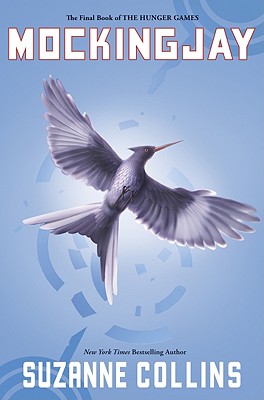
Mockingjay


Spoilers annoy me; I avoid them like the plague. Sometimes you get blindsided by them, though. I heard a few  of the most gut-wrenching details from Suzanne Collins's final Hunger Games novel, MockingJay before I managed to read it, which sucked out some of the impact the book had on me.

Still, I really enjoyed it. The end fulfilled the potential the series had built up. It had a certain exhausted poignancy about it. The brilliant character development begun in the first two novels carried through to a nice conclusion, the tone of setting changed without losing the tone of the first or second novels, and all in all, Collins rocked it, and like any truly empathetic story, readers either love or hate how it all turned out. Either way, passion is assured, whether they feel the final chapters of worthy their dedication or a betrayal thereof.

If you are one of the few book people not to hear of and/or read this book already, or are a non-book person who reads a book a year, I say you get your hands on the full series, including BUYING Mockingjay. It's earned a re-read, whether you're a "young adult" or not.

Saturday, August 6, 2011

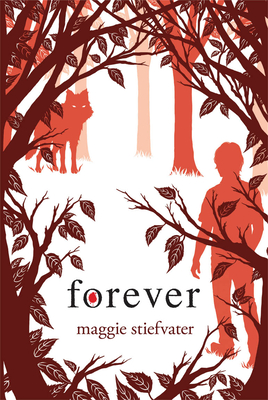
Forever


Maggie Stiefvater's Shiver trilogy is one of the few series I've loved, but do not own, and I think it's because it intimidates me. The fluid insertion of poetic imagery (I loved Sam's description of  something being as "thin as a lie") speaks of such easy talent that a reader can't help but be wooed.  Whether you're attracted to Grace, Sam, Cole, or Isabel, it doesn't matter, because each character has his or her own magnetism--both the kind that draws in, and the kind that repels.

In Forever, Stiefvater ties up all the severed ends cut apart in the second installment, Linger, and rocks out some very nice, natural-feeling bows.

A personal (well, more personal, since I suppose reviews are already seriously personal) note? Even the dedication and acknowledgement rang with gorgeousness and made me cry a little. How is that in any way fair?

I'm on the fence about whether or not it's a Buy or Borrow, but only for myself. For the rest of you, it's not so much a gamble to advise you go ahead and support your local indie bookstore* with some cash on behalf of this book.

*Oh, look, I've even included a handy IndieBound link in the book title.

Friday, July 29, 2011

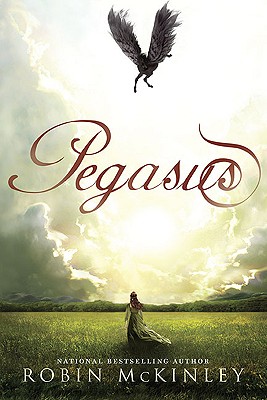
Pegasus


It wouldn't be honest to say Robin McKinley's Pegasus was a fast read for me. In fact, it took me two to three times longer than I'd anticipated.

I can't say it was an easy read, either, as some parts were . . . well, not exactly difficult, but more like tedious.

I can't even simply say I enjoyed the book. I wouldn't say that. Because while the writing was experienced, sometimes extremely evocative, and somehow ripe, there were also places where the writing killed off the story, which is about a young girl (starting out with a genuinely childish twelve-year old, and coming in one of the many "Hurry up and flounder" moves, to fifteen-nearly-sixteen/adulthood) being magically (spirtually? mentally? unusually?) bound to her royal Pegasi counterpart, and what the surprising differences to historical bindings this one poses. Of course there's a bad guy who hates it, a thoroughly bad bad guy we all want to smother in his own supercilious robes, and there are wise monarchs, loving maternal figures, and the much-lauded Third-party-OR-ARE-THEY?!?! threats from great Pegasi-and-human-eating beasts.

There, in fact, 404 pages of these things. Or rather, there are 300 pages leading up to these things, 79 pages of the actual STUFF, and then 20 pages of WHOA, CRAP!, followed by 5 blunt pages of me getting very, very angry, because I--a hardcore devourer of books--have just toiled for at least three-fourths of this book to get to the last page to find . . . nothing.

You remember the Looney Toons wherein Wile E. Coyote would be chasing the Road Runner around, hellbent on (I . . . don't actually know. Did he want to eat him? Take back his pride? Square Dance?) catching that bird when suddenly he finds himself three feet out over the edge of some cliff-edge he'd have sworn hadn't been there two seconds ago? You see it before he does, but then he looks down, looks back up at you, and for the two or three moments he has before he waves, gulps, and begins to fall, you both know the very worst of what's about to happen.

That's page 404 of Pegasus. It's not that I don't like books that leave off in the middle of the action, with no real sense of having accomplished anything--wait, no, that's exactly what it is.  I know I'm always harping about book that could have been tightened up, I guess that's just my style, but if a book takes 400-some pages to just get to the big UH-OH, and then either plans on letting you hang, or means to make you wait for a sequel, my reaction is going to be something to the tune of, WTHades, people!? Cut out 200 pages, put in 200 OTHERS to finish out the frakking story, and let's get a real book out of these pulped trees, already!*

I didn't like the book; I liked the story, but I'm not sure I liked it enough to tip the scales. If you're cool with unnecessarily dense run-around, however well-done, you could borrow this from the library, but otherwise, I advise you BYPASS it.

*I have now looked around to find Pegasus does indeed have an intended sequel, which is good for those who find the ending enough of a cliff-hanger to wait for it, but still doesn't really do anything to change my opinion--so I guess it's good it's purported McKinley herself admits readers will hate her for how the book ends, and she's got a good sense of humor about it.

Wednesday, July 20, 2011

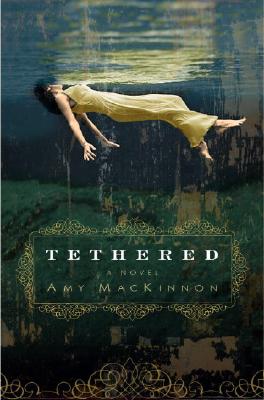
Tethered


There are few books that have done to me what Amy MacKinnon's Tethered has done, which is to take me through a solid, somber tale, leading in a very certain direction and with an expected pleasurable conclusion and then blow it all to hell in the last five pages.

What I thought was going on? Not even. Going back and checking details against what really was happening? Makes TOTAL sense. All of it. A retro "ah-HAH!" moment, or rather, a barage of them, because it was great, and it all fit together like a thousand-piece jig-saw.

And I can't even tell you anything specific about the brilliance, because as River Song would say, "Spoilers!" I suppose I'll need to keep it simple, then.

The narrative--from the perspective of Clara, a withdrawn, somewhat broken undertaker--has a quiet, steady pace, calming even with the often disturbing subject matter. It isn't that Clara regards these things with any sense of flippancy, rather the opposite; her ability to process grief is so underdeveloped it's as if tragedy slides right off of her, until a certain little girl gets under Clara's skin and Clara becomes concerned with the child's home life.

Before it's all over, just about every (living) person in Clara's life is somehow connected to the young girl's circumstances: The compassionate couple who run the funeral home where Clara works, and who consider Clara their child; the older detective assigned to the little girl's case; the younger officer eager to help solve it; and not a few of the former residents of the bodies Clara works on.

Maybe I should have paid closer attention when I put a hold on Tethered with my library, because the novel is labelled "suspense", which might have given me some better idea of what was coming, but then again, maybe not. All I can say about it was that it was awesome.

So, do I recommend you buy Tethered or do I suggest you just borrow it? Well, that depends. How much do you love suspense novels? Are you the kind of reader who appreciates the craftsmanship in a good mystery enough to read it again, even after the mystery is solved, or not? If so, BUY, if not, BORROW. Either way I expect you'll enjoy yourself.

Sunday, July 10, 2011

Tiger's Curse


Tiger's Curse  by Colleen Houck reads a bit like a list of things NOT to do in a debut novel, including almost all "telling" rather than "showing", excessive use of weak, generic adverbs (and redundant description, in general), awkward plot transitions, contradictory conclusions, and much, MUCH, extraneous narrative, sometimes poorly disguised as introspection by the main character.

I wanted to enjoy this book, I did. I mean, look at that gorgeous cover! And tigers! Tigers are COOL, cursed tigers, even better. India? Great! I'd like to know more about India, and it isn't an overdone setting. Reading about it like I'm surveying a shelf of BROCHURES on India? Not so much.

In the end, I couldn't overlook the inexperienced writing enough to enjoy such a good premise--namely a normal girl recruited by an Indian gentleman, a many-armed goddess, and a tiger prince to help lift a centuries-old curse.

So, could Tiger's Curse have been a great book? YES. Was it? No, I'm sorry to say it was not. It get's a Bypass.

P.S. I must admit, I did rather like the character Phet. He made me giggle.

*Disclaimer A. After reading much of the book and wondering how an editor would knowingly let an author put out a book with so much still to be done, I scanned the back flap copy and Acknowledgments pages hoping to find an answer, and I kind of did.

Originally a self-published eBook*, Tiger's Curse enjoyed success and was then picked up by a publishing company, who then--in my opinion did the author a disservice by not encouraging her and guiding her in polishing the novel, thereby reaching its potential, before hitting the mainstream market. A friend of mine, formerly an editor at a publishing house, explained a common practice for these self-pubb'd eBook pick-ups is to edit solely for typographical errors, possibly due to First Print rights already having been taken, a concept I understand in theory, but still feel is negligent and morally shady. Obviously, this is speculation on our parts, but such a reason would go a long way in making me understand, if not necessarily agree with it.


**Disclaimer B: I don't feel self-published authors are in any way inferior to traditionally published authors. Just the opposite actually. If you want to see some fantastic, enviably talented self-, indie-,e-published authors, boy have I got a list for you.

Saturday, July 9, 2011

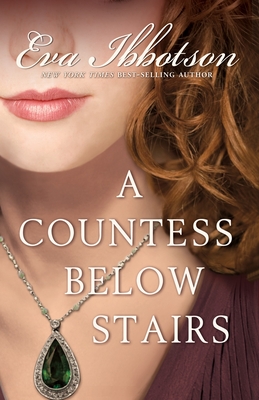
A Countess Below Stairs


Eva Ibbotson's A Countess Below Stairs is sweeter than bee pollen, to quote an old Tom Cruise movie, and I mean that in a good way. If you're a mom and you've got a tween daughter who wants to start on romance novels with like-age protagonists, or if you just want to experience an old-fashioned innocent-but-touching romance, this is your book.

I myself began reading adult romances at thirteen, when my mother handed me a Jude Devereaux novel in hopes it would keep me from mourning (read: bawling) the entire fifteen-hour drive move from my best friend, and that was okay, but let's face it. Jude's got sex scenes in her, and while she does them tastefully, thirteen might not be the best age to introduce them.

Countess on the other hand, is romantic without being lustful. It was a nice breather from books with insane hormone swings and heaving hearts. The book includes simple but entirely creditable characters (with the possible exception of the main character being just a bit too selfless and optimistic, but only just a bit), which went a very long way in winning me over.

Without meaning to imply the book is in any way childish, let me just say, if you at all liked the animated film Anastasia you will really dig this novel. I'm going with a Buy on it.

Thursday, July 7, 2011

Need and Captivate

Need by Carrie Jones: Book Cover         book cover of 

Captivate 

 (Need Pixies, book 2)

by

Carrie Jones

I've mentioned being a fan of Melissa Marr's Wicked Lovely series, so it's not much of a surprise I'd pick up Carrie Jones's first and second pixie novels, Need and Captivate.


The books follow a pretty basic concept; girl experiences tragedy, moves far from home, realizes she and/or people in her new town aren't exactly normal, and then comes to find out why.

This one was both a hit and a miss for me. Pluses? The narrative flows pretty well, with likable (if sometimes a bit cookie-cutter) characters, some bright points in dialogue, and an interesting turn with looking at Pixies as their own culture, rather than a subset of other faeries, not to mention the inclusion of Norse mythology regarding Ragnarok (the Viking version of the Apocalypse--not just a killer move in Final Fantasy franchise games, who knew??). Negatives involve a lack of real tension, any breakaway character development or world-building, and a shortage of description in certain areas.

Jones's books are a nice, easy read, and would do well to snack on for those whose appetites for Fae fare have gone a while without a richer main course, but as I didn't consider them quite rich enough for my personal tastes, I'm giving the first two books a BORROW. However, who knows; after I've read the third ( and I think--don't quote me--final) book in the series, Entice, I may have to come back and reevaluate. ;)

Sunday, June 26, 2011

Moon Called: Book One in the Mercy Thompson Series


In short-short, I liked Patricia Briggs's Moon Called. It wasn't my favorite book ever, but it was solid and satisfying, with enough character voice and surprises to keep me happy with the end result, especially for a clear series starter.

I had one nit-pick with it as far as yanking me out of the story, and that was the use and lack of use of contractions in various places. I know, that sounds stupid, but when a reader expects a character to say "I'm" rather than "I am" it gets kind of stumbly.

For a plus point, I particularly liked main character Mercy's pace with revealing information and in explaining her own logistical conclusions.

All-in-all, I give this book a strong Borrow, a Buy if you're really, really into contemporary supernaturals.

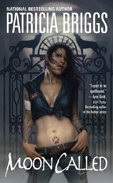
On a shallow note, a peeve and praise for the cover designers.

First, the peeve. What mechanic worth her grease would wear her work shirt a). unbuttoned and tied up that way, and b). with a push-up bra? I cannot suspend belief enough to think this covergirl mechanic seriously thinks she'll draw in business this way, even from skeevy rich dudes. Skeevy rich dudes go to strip clubs to see girls in knotted, push-up bra-ed outfits, not garages. Mercy's not stupid; she'd dressed professionally, but for functionality, and so her customers see her as a competent business woman.

However! Kudos to the person who sized and placed the endorsement blurb by Charlaine Harris. It's noticeable without detracting from the cover image, title, or author. That's tasteful and I applaud your class with that issue, Unknown Cover Person.

Saturday, June 25, 2011

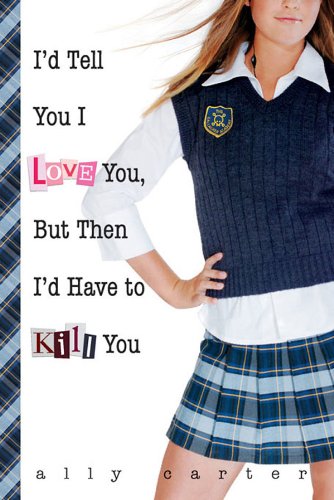
I'd Tell You I Love You, But Then I'd Have To Kill You


Now, for the sake of full disclosure (I disclose stuff all the time; be prepared), Gilmore Girls and Veronica Mars are my two all-time favorite grown-up TV shows (I like a lot of kids' shows, too. *shrugs*), and to realize moments after finishing I'd Tell You I Love You, But Then I'd Have to Kill You by Ally Carter that the whole book is one possible answer to the question, "What would happen if you enrolled a gonvernment-funded Veronica Mars in Chilton, the private school in Stars Hollow, fictional home of Lorelai and Rory Gilmore?", well, whoa.

Yes, yes, that was a really long, awkward, badly-written sentence. Don't care. I wasn't actually awake when I composed it.

Point is, I thoroughly enjoyed the first of Carter's Gallagher Girls novels. I dug the well-balanced aspects of narrator Cammie's real life with that of her cover life. On the one hand, the kind of life we normal peeps live is about as alien to Cammie "The Chameleon" Morgan, only daughter of a super-spy and the headmistress of Cammie's own seriously serious spy school for genius girls, as being a girl genius super-spy-in-training would be to us. Which is to say, mucho Vulcan.

Another great balance? Flippancy vs. solemnity. Some pages are devoted to silly, girly angst of the "I speak fourteen languages and not a single one of them translates to BOY!" and homework vareties, while other pages deal with heartache over lost loved ones, fear of incompetence (as all three, spy, friend, and girlfriend), and finding redeeming qualities in a new enemy. The great thing? Carter blends these themes seamlessly. The fluff is marshmallowy, deep stuff is satisfyingly subcutaneous.

Also, a Brownie Point for mentioning Gilmore Girls, Buffy the Vampire Slayer, and Dirty Dancing. Though, to be perfectly fair, I thought two mentions of Buffy =ed cool; three . . . enh, kind of pushing it.

So, the short version, if you're into anything like the shows mentioned above, or like a read that treads the worlds of fluffy AND textured, BUY this one.


Sunday, June 19, 2011

Chime


Chime by Franny Billingsley is one of the most gorgeous books I've read in a long while, and yes, the cover is gorgeous too, but when I picked up the book from my library, I really didn't think a novel with such a glammed-up, confidently-posed covergirl would have the kind of depth this book has.

Boy, how was I wrong! The narrator, Briony, tells the story of herself, her father, her addled twin sister (Rose), her late step-mother, the new boy in town, and to top it all off, the very real swamp bogies in their backwoods, turn-of-the-century English villiage (in fact, kind of think of Shamalyan's The Village). Briony's voice has a wonderful point and counter-point to it, using rich language, but in a stark, staccato rhythm I found absolutely wonderful. This voice matches the way Briony views herself, on one hand gifted with Second Sight, while loathing herself for her selfishness and desire to break free of her responsibilities. 

I can't properly describe how  the adjective "flat" can be desirable or even complimentary, so you'll totally have to go BUY this book to see what I mean.